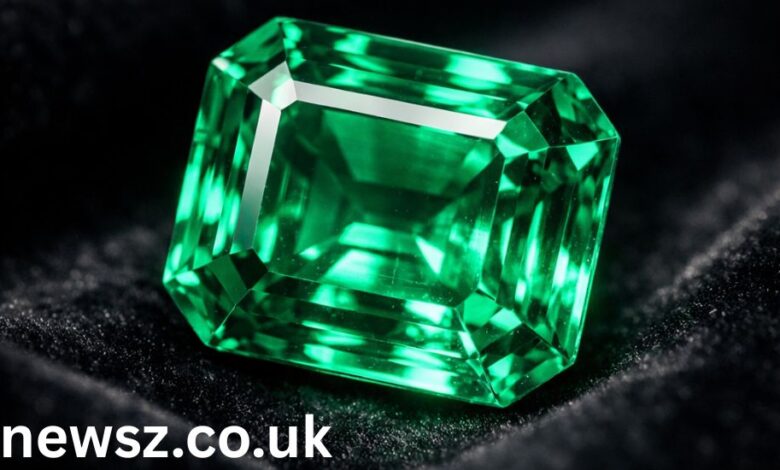
Emerald is one of the most admired and valuable gemstones in the world, celebrated for its rich green color and deep cultural significance. For thousands of years, emeralds have fascinated kings, queens, scholars, and collectors alike. Known as the “stone of kings” and a symbol of rebirth and prosperity, emerald holds a unique place among precious gems such as diamonds, rubies, and sapphires. Its beauty is not only visual but also symbolic, connecting humanity with nature, renewal, and wisdom.
This article explores emerald in depth—its origin, scientific properties, history, mining sources, quality factors, symbolism, modern uses, and lasting importance in today’s world.
1. What Is an Emerald? – Scientific Definition
Emerald is a green variety of the mineral beryl, whose chemical formula is Be₃Al₂(SiO₃)₆. Its green color comes from trace elements of chromium and vanadium. Without these elements, beryl appears as other gemstones such as aquamarine or morganite.
Emerald ranks 7.5 to 8 on the Mohs hardness scale, making it fairly hard, but it is often more fragile than diamonds because of its natural inclusions and internal fractures. These inclusions are commonly called “jardin” (French for garden) because they resemble moss or plant-like patterns inside the stone.
Key physical properties of emerald include:
- Color: Green to bluish-green
- Transparency: Transparent to translucent
- Crystal system: Hexagonal
- Hardness: 7.5–8
- Luster: Vitreous (glass-like)
Despite its internal flaws, emerald’s intense color gives it exceptional value and appeal.
2. The Origins and History of Emerald
Emeralds have been treasured for more than 4,000 years. Some of the earliest known emerald mines were located in ancient Egypt, dating back to around 330 BCE. Cleopatra was famously devoted to emeralds and used them in her royal jewelry, even gifting engraved emeralds to foreign dignitaries.
In ancient Greece and Rome, emeralds were associated with Venus, the goddess of love and beauty. Roman scholars believed emeralds could improve eyesight and calm the soul. The famous Roman author Pliny the Elder wrote that nothing was greener than emerald and that it refreshed the eyes when viewed.
In South America, emeralds were already valued by indigenous civilizations long before Spanish explorers arrived. When the Spanish discovered the rich emerald deposits of Colombia in the 16th century, emeralds quickly spread throughout Europe and Asia, becoming symbols of wealth and power.
Throughout medieval and Renaissance periods, emeralds were thought to possess magical and healing powers. They were believed to protect against evil spirits, reveal truth, and strengthen memory and intelligence.
3. Major Emerald Mining Locations
Today, emeralds are mined in several regions of the world, but some sources are considered more prestigious due to quality and color.
Colombia is the most famous emerald producer, responsible for some of the finest emeralds ever discovered. Mines such as Muzo, Chivor, and Coscuez produce stones with a deep, vivid green color that is highly prized in the gem market.
Other important emerald sources include:
- Zambia: Produces emeralds with slightly bluish-green tones and high clarity
- Brazil: Known for lighter green emeralds and large crystal formations
- Afghanistan: Produces high-quality stones from the Panjshir Valley
- Pakistan: Supplies fine emeralds with rich color
- Russia: Historic emerald mines in the Ural Mountains
Each region produces emeralds with unique characteristics, making origin an important factor in gemstone valuation.
4. Quality and Value Factors of Emerald
Like diamonds, emeralds are evaluated using quality standards, but with special emphasis on color.
The four main factors that determine emerald value are:
1. Color
Color is the most important feature of an emerald. The most valuable emeralds display a pure, intense green with a slight bluish tone. Too much yellow or brown lowers the value.
2. Clarity
Unlike diamonds, emeralds are expected to have inclusions. Completely flawless emeralds are extremely rare. Stones with fewer visible inclusions are more valuable, but inclusions that do not affect durability are acceptable.
3. Cut
Emeralds are often cut in a rectangular shape known as the emerald cut, which reduces pressure on the stone and highlights its color. Other shapes include oval, round, pear, and cushion cuts.
4. Carat Weight
Larger emeralds are rare and can be more valuable than diamonds of the same size if they have good color and clarity.
Because emeralds are delicate, they are often treated with oils or resins to enhance clarity. This practice is widely accepted but must be disclosed in gemstone trading.
5. Symbolism and Meaning of Emerald
Emerald has been linked with powerful symbolism across cultures.
Traditionally, emerald represents:
- Rebirth and renewal
- Love and loyalty
- Wisdom and growth
- Peace and harmony
In ancient traditions, emerald was believed to bring foresight and truth. Some cultures thought it could protect the wearer from deception and strengthen intuition.
Spiritually, emerald is associated with the heart chakra, symbolizing compassion and emotional balance. It is believed to encourage kindness, patience, and understanding in relationships.
Emerald is also the birthstone of May, making it a popular gift for birthdays and anniversaries. It is commonly connected with the zodiac sign Taurus and is thought to support creativity and stability.
6. Emerald in Jewelry and Fashion
Emerald has been used in jewelry for centuries and remains one of the most elegant gemstones today. It is commonly set in:
- Rings
- Necklaces
- Earrings
- Bracelets
- Royal crowns and ceremonial pieces
Because emeralds are softer than diamonds, they are often placed in protective settings, especially in rings. Gold and platinum settings beautifully complement emerald’s green tone.
Famous emerald jewelry pieces include:
- The emerald tiara worn by royalty
- Museum collections with historic emerald carvings
- Celebrity emerald engagement rings
In modern fashion, emerald is a popular gemstone for statement jewelry and luxury designs, symbolizing sophistication and natural beauty.
7. Healing and Metaphysical Beliefs
Although not scientifically proven, emerald has long been associated with healing properties in traditional belief systems. It is said to help with:
- Emotional balance
- Stress reduction
- Mental clarity
- Strengthening memory
- Improving relationships
In crystal healing practices, emerald is believed to calm the heart and encourage forgiveness and compassion. Many people use emerald during meditation for peace and focus.
While these beliefs are symbolic rather than medical, they highlight the deep emotional and cultural connection people feel toward this gemstone.
8. Emerald in Modern Times
Today, emerald remains one of the most valuable gemstones in the world. High-quality emeralds can sometimes be more expensive per carat than diamonds. They are sought after by collectors, investors, and jewelry lovers alike.
Emerald also plays a role in:
- Luxury markets
- Wedding and engagement jewelry
- Cultural heritage collections
- Museum exhibitions
With advances in gemology, synthetic emeralds are now produced in laboratories. These stones have the same chemical structure as natural emeralds but lack natural inclusions. While visually similar, natural emeralds hold higher value because of their rarity and historical appeal.
9. Care and Maintenance of Emerald
Due to its internal fractures, emerald requires special care. Owners should avoid:
- Harsh chemicals
- Ultrasonic cleaners
- Rough impact
Emerald jewelry should be cleaned gently with warm water and mild soap. Regular professional inspection helps prevent damage and ensures longevity.
Proper care allows emerald jewelry to last for generations, preserving both beauty and sentimental value.
10. Conclusion
Emerald is far more than a green gemstone. It is a symbol of nature’s beauty, human history, and emotional meaning. From ancient Egypt and Roman legends to modern jewelry and fashion, emerald continues to inspire admiration and wonder. Its unique color, rarity, and cultural depth make it one of the most treasured gemstones on Earth.
Emerald’s story reflects humanity’s eternal attraction to beauty and symbolism. Whether worn as jewelry, studied as a mineral, or admired as a work of nature, emerald stands as a timeless reminder of renewal, love, and wisdom.
As this article reaches its end, we proudly share it with readers of Newsz, where knowledge, culture, and valuable information come together. Through platforms like Newsz, timeless subjects such as emerald continue to educate and inspire people around the world, connecting ancient heritage with modern understanding.