United Flight UA109 Diversion: A Detailed Look at the Incident, Safety Protocols, and Aviation Decision-Making

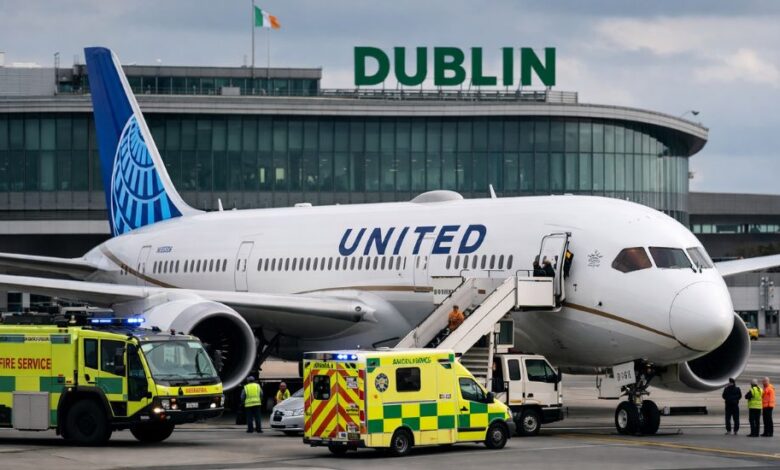
The diversion of United Flight UA109 Diversion captured widespread attention across aviation tracking platforms, news outlets, and travel blogs after the aircraft unexpectedly changed course mid-journey while flying over the North Atlantic Ocean. What initially appeared to be a routine long-haul international flight soon became a textbook example of how aviation safety systems, crew regulations, and emergency response procedures work together to protect passengers and crew.
This incident was not caused by weather turbulence or mechanical malfunction, as many first assumed, but by a medical issue affecting a crew member. While diversions due to passenger emergencies are not uncommon, a diversion involving a crew member underscores the strict safety standards that govern commercial aviation, especially on transatlantic routes.
This article explores the background of United Flight UA109, the events that led to its diversion, the role of international aviation regulations, why Dublin was chosen as the alternate airport, and what the incident reveals about modern airline safety culture.
Background of United Flight UA109
United Flight UA109 is a regularly scheduled international service operated by United Airlines, connecting Munich, Germany, with Washington, D.C. at Dulles International Airport. This route is part of United’s transatlantic network designed to serve business travelers, diplomats, tourists, and connecting passengers across Europe and North America.
The aircraft operating the flight on the day of the incident was a Boeing 787-8 Dreamliner, a modern wide-body jet known for long-range capability, fuel efficiency, and advanced onboard systems. The Dreamliner is certified for extended operations over remote oceanic regions under ETOPS (Extended-range Twin-engine Operational Performance Standards), which allow twin-engine aircraft to fly long distances from diversion airports under strict conditions.
The flight departed Munich as scheduled, with a full complement of passengers and crew. Weather conditions across the North Atlantic were reported to be normal, and there were no early indications of mechanical issues. For several hours, the aircraft cruised smoothly along its planned route.
The Moment the Situation Changed
Midway across the Atlantic, while the aircraft was cruising at altitude, one of the flight crew members reportedly experienced a sudden medical problem that prevented them from continuing their duties. Aviation regulations require that a minimum number of fit and certified crew members be available at all times to safely operate a long-haul flight.
Unlike passenger medical events, which can sometimes be managed onboard until landing, crew medical issues directly affect operational safety. If a crew member becomes unfit for duty, the flight may no longer meet regulatory requirements for staffing levels, particularly on long international segments.
The captain and flight operations team evaluated the situation and determined that continuing the journey to Washington, D.C. without a fully fit crew would violate safety protocols. As a result, the decision was made to divert the aircraft to the nearest suitable airport capable of handling a wide-body jet and providing medical assistance.
Why Dublin Was Chosen as the Diversion Airport
After assessing several possible alternates, the flight was diverted to Dublin Airport. Dublin is a common diversion point for transatlantic flights for several important reasons:
- Geographic Location
Dublin lies directly along major North Atlantic flight corridors, making it one of the closest large airports for aircraft traveling between Europe and North America. - Medical and Emergency Services
The airport is fully equipped to manage medical emergencies and has rapid access to hospitals and emergency responders. - Infrastructure for Wide-Body Aircraft
Dublin Airport routinely handles large aircraft such as Boeing 787s and Airbus A330s, ensuring that a diverted flight can land, park, refuel, and potentially continue its journey. - Operational Readiness
Air traffic control and ground handling teams in Dublin are highly experienced with unscheduled diversions.
The aircraft executed a controlled turn and headed toward Ireland, descending safely and landing without incident. Passengers onboard were informed by the crew about the situation, with assurances that safety was the top priority.
Medical Response and Ground Operations
Upon landing in Dublin, medical personnel boarded the aircraft to assess the affected crew member. Reports indicated that the medical condition was not life-threatening, but serious enough to justify the diversion. The crew member was taken for further evaluation, while the remaining crew coordinated with United Airlines operations to determine the next steps.
Meanwhile, passengers remained onboard or were temporarily allowed to stretch while the aircraft was serviced. Fuel checks, flight planning adjustments, and crew duty time calculations were conducted to ensure that the continuation of the flight would remain compliant with aviation regulations.
After a delay of roughly two hours, the aircraft was cleared to depart again for Washington, D.C. The remainder of the journey proceeded normally, and the flight arrived safely with only a moderate delay.
Regulatory Requirements and Crew Fitness
One of the most important aspects of this incident is how it illustrates the strict regulatory framework governing international aviation.
Flight crew members must be physically and mentally fit to perform their duties at all times. On long-haul flights, airlines carry extra crew members to allow for rest periods. However, there is still a minimum number of qualified pilots and cabin crew required to safely operate the aircraft.
If a crew member becomes incapacitated or unable to continue, the flight may drop below that threshold. In such cases, international aviation law requires diversion to the nearest suitable airport. These rules exist to prevent fatigue, impaired decision-making, and reduced emergency response capability.
The decision to divert UA109 was therefore not optional—it was mandatory under safety regulations.
The Role of ETOPS and Transatlantic Planning
Every transatlantic flight plan includes pre-approved alternate airports. These are selected before departure and continuously monitored during flight. Under ETOPS guidelines, aircraft must always remain within a specific distance of an airport capable of supporting emergency landings.
For UA109, Dublin was one of several planned alternates along the route. When the crew medical emergency occurred, the aircraft was still within safe diversion range of Ireland, making Dublin the logical and safest choice.
This demonstrates how much preparation goes into a flight long before passengers board the aircraft. Diversions may seem sudden to the public, but they are the result of careful pre-planning and real-time risk assessment.
Passenger Experience and Communication
For passengers, a diversion can be confusing and stressful, particularly when flying internationally. In this case, communication from the flight crew played a key role in maintaining calm onboard.
Passengers were informed that the diversion was precautionary and related to a crew medical issue rather than a mechanical failure or security threat. This transparency helped reduce anxiety and speculation.
While the delay caused inconvenience, many travelers later expressed appreciation that safety was prioritized over schedule. Airlines are increasingly aware that how they communicate during disruptions is just as important as the technical response itself.
public Reaction and Online Attention
Flight tracking websites and aviation news blogs quickly picked up the unusual flight path of UA109, prompting widespread discussion online. Some initial speculation suggested mechanical problems or weather issues, but later reports clarified that the diversion was medical in nature.
This highlights how modern technology allows the public to monitor flights in real time, often leading to rapid spread of incomplete or incorrect information. Official clarification from airlines and aviation authorities remains crucial in preventing misinformation.
What This Incident Teaches About Airline Safety
The diversion of United Flight UA109 serves as a powerful reminder of several key truths about aviation:
- Safety always overrides convenience and scheduling.
- Crew health is just as important as aircraft condition.
- Diversions are not failures, but examples of risk management in action.
- International cooperation between airlines, airports, and emergency services is essential for smooth crisis response.
Rather than being seen as a disruption, this diversion demonstrates how the aviation system works exactly as designed.
Broader Implications for the Industry
Incidents like this reinforce the importance of crew medical screening, fatigue management, and onboard health monitoring. Airlines continue to invest in better training, medical kits, and communication tools to handle such events efficiently.
They also show why alternate airports such as Dublin, Shannon, and Reykjavik remain vital hubs in transatlantic travel, providing a safety net for thousands of flights each year.
Conclusion
The United Flight UA109 diversion was a clear example of aviation safety protocols functioning effectively under real-world conditions. A crew medical emergency, while unfortunate, was handled professionally through rapid decision-making, regulatory compliance, and coordinated action between flight crew, ground services, and medical responders.
Passengers ultimately arrived safely at their destination, with minimal delay and no serious injuries reported. The incident underscores that in aviation, caution is not a weakness—it is a strength.
In an era where speed and efficiency dominate travel expectations, UA109’s diversion reminds us that the primary mission of every flight remains unchanged: to deliver people safely, even if that means landing somewhere unexpected.
Stories like this are important to document and analyze because they provide insight into the unseen systems that protect millions of travelers each day. At Newsz, we continue to track and report on such aviation events to keep readers informed about the realities behind modern air travel and the complex decisions that ensure safety above all else.